When I went to buy Pariah Genius I searched the photography and biography sections without success. The assistant said try fiction and that’s where it was.

Photographer John Deakin (b.1912) died, largely unknown and unmourned, in 1972. He is now best known for his work centred on members of Francis Bacon’s Soho inner circle. Bacon based several important paintings on photographs commissioned from Deakin, who he, Bacon, considered ‘the best portrait photographer since Nadar and Julia Margaret Cameron’. Much of what remains of his work was rescued from under his bed after his death or found by chance in the archives of English Vogue (he was sacked twice by the magazine for repeated loss of equipment and drunkenness).
The significance of his work has been increasingly recognised: the Victoria & Albert Museum mounted the exhibition John Deakin: The Salvage of a Photographer in 1984; in 1996 the National Portrait Gallery London presented John Deakin Photographs; and Robin Muir has published three volumes of Deakin’s work. His stark and unforgiving portraits, mugshots, have come to define ‘the hard-drinking bohemians of demimonde Soho in the 1950s’, which, beside Bacon, included among others Lucian Freud, Frank Auerbach, Daniel Farson, Isabel Rawsthorne, Henrietta Moraes, and George Dyer. At one point Sinclair makes a not inappropriate reference to Diane Arbus, ‘another prime facilitator of freaks’.

At the beginning of the Covid lockdown writer Iain Sinclair was sent seventeen albums of Deakin’s photographs – prints and contact sheets – which he viewed as a ‘serial autobiography in images’. The original aim was to write a non-fiction biography, but the book began to take on the form of a novel, with a narrator emerging to follow Deakin with his camera, usually a Rolleiflex, into Soho, the ‘malicious world of Francis Bacon’s court’, and across the Continent to Paris, Rome and Athens.
Sinclair seeks to enter Deakin’s mind and imagination. Eighteen chapters of Pariah Genius open with a Deakin photograph and from it the author weaves a gossipy narrative through the context of the image itself and the precarious lives of both the photographer and his subjects. Each chapter becomes something akin to a picaresque short story. Is what he is telling us true? It might be, it might not, we can’t be sure; and driven along by the magical prose we quickly end up not caring and go with his guesses and suppositions.
We learn little about the art and craft of photography and the true worth of Deakin’s work, but that’s not the point of Pariah Genius. What we do see is that Deakin’s life as a photographer was anything but glamorous – he is described as a ‘drudge’ and his subjects are ‘victims’. He was cynical and casual about his work.
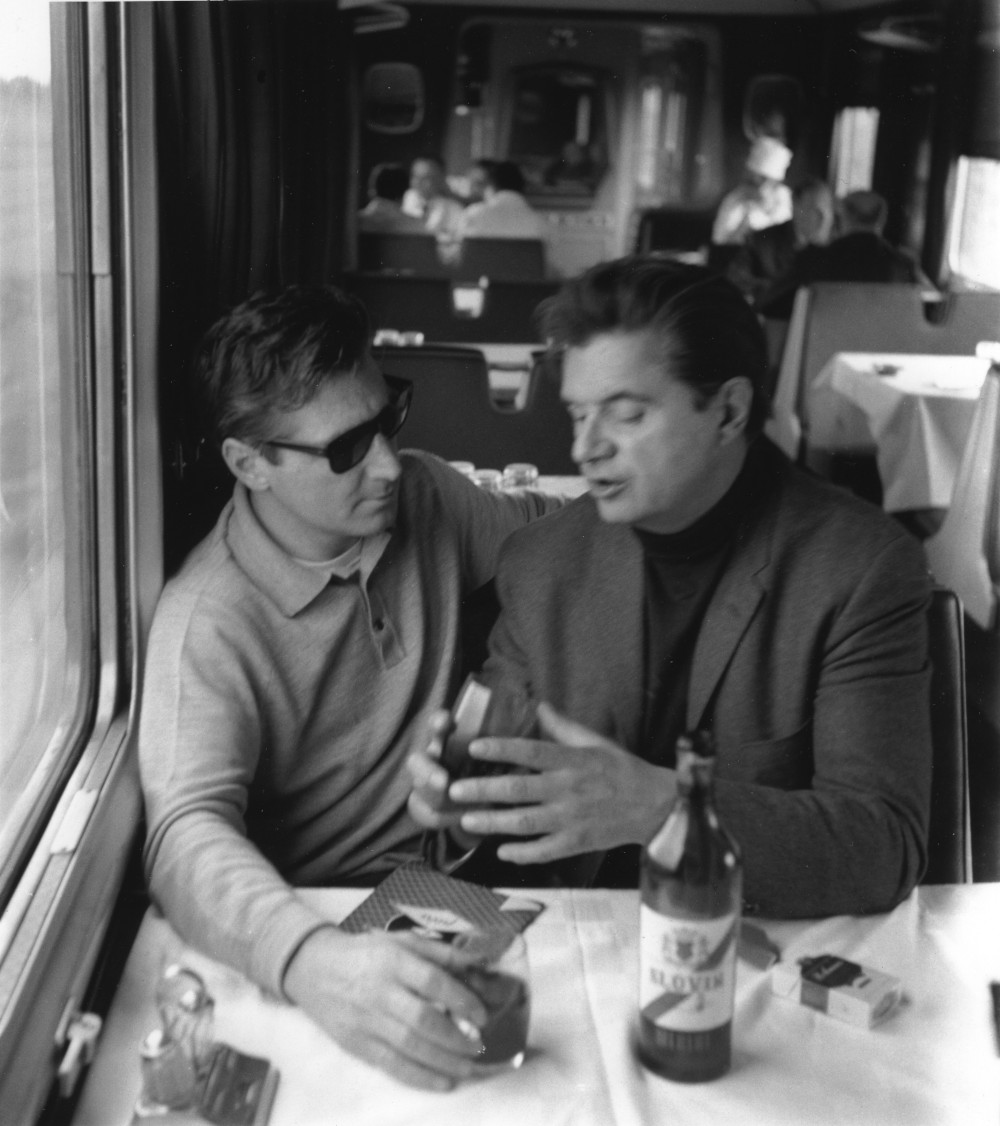
Sinclair sums him up: ‘Disliked by those who didn’t know him well, and loathed by those who did (affectionately loathed in some cases), John Deakin made his long and stuttering career into an arc of revenge’; and ‘Deakin’s prints expose the crimes of others, while concealing his own. His gift came at a cost. Recording everything, he was obliged to eat the sins he depicted. His true confession was never heard’.
Pariah, yes, to some; genius, maybe.
Cheerio, the publishers, say the book is ‘twisty and enigmatic…evades definition — [is] fiction and non-fiction, art and metafiction’. Reviewers have variously described it as: ‘full of rabbit holes’; ‘a startling piece of Psychogeography… developed in the dark room of Sinclair’s imagination’; and ‘a rollicking account of the celebrity criminals, obliging osteopaths and screaming queens of the seedy quarter’.

Having read it, I’m still no clearer which section of the bookshop it should be in, but I’m glad I found it.
Pariah Genius: John Deakin and the Soho Court around Francis Bacon – A Psychobiographic Fiction, Iain Sinclair. Cheerio 2024