My U3AC class The Moon in Poetry looked at poems by Sapho, Hardy, Dickinson, Frost and Lorca yesterday. The theme was the moon in space. The Frost poem was ‘Moon Compasses’.
I stole forth dimly in the dripping pause
Between two downpours to see what there was,
And a masked moon had spread down compass rays
To a cone mountain in the midnight haze,
As if the final estimate were hers,
And as it measured in her calipers,
The mountain stood exalted in its place.
So love will take between the hands a face. . . .
I didn’t see them as particularly complex poems and felt they could be taken as they were: the distillation of emotions and images that gave pleasure. But, given the nature of the class, we picked at them, of course, teasing out possible meanings and allusions and sometimes challenging the appropriateness of word choices. I felt that we should just read them for pleasure, that in analysing them we lost something, that we sacrificed feeling for meaning.
I had a similar experience recently with Mark Jenkin’s film Enys Men. Discussing it afterwards with a friend, he said that he had struggled understand what Jenkin was getting at and remained mystified. I suggested in that case he shouldn’t worry about it and just enjoy the strangeness of a barren landscape that is alive and may be sentient.
This set me thinking about the photography courses I’ve been involved with at the U3AC. Over several years I’ve tried to get people to look critically at photographs, their own and others that they see around them. A central part of this is to ask what the picture is of and what it’s about; and there are questions to be asked about it’s formal qualities, such as composition and technique. A photograph of a great subject is not necessarily a great photograph. My aim is to foster a greater understanding of photography as a creative medium and to encourage people by take better (more thoughtful?) photographs. But am I falling into the same trap as the poetry group? Does the picture lose something by over analysis? Maybe the starting point should be the initial impact, the emotional response. Is it good, bad or indifferent? An analysis can then inform that judgement and allow one to understand the weight that should be attached to meaning and other criteria.
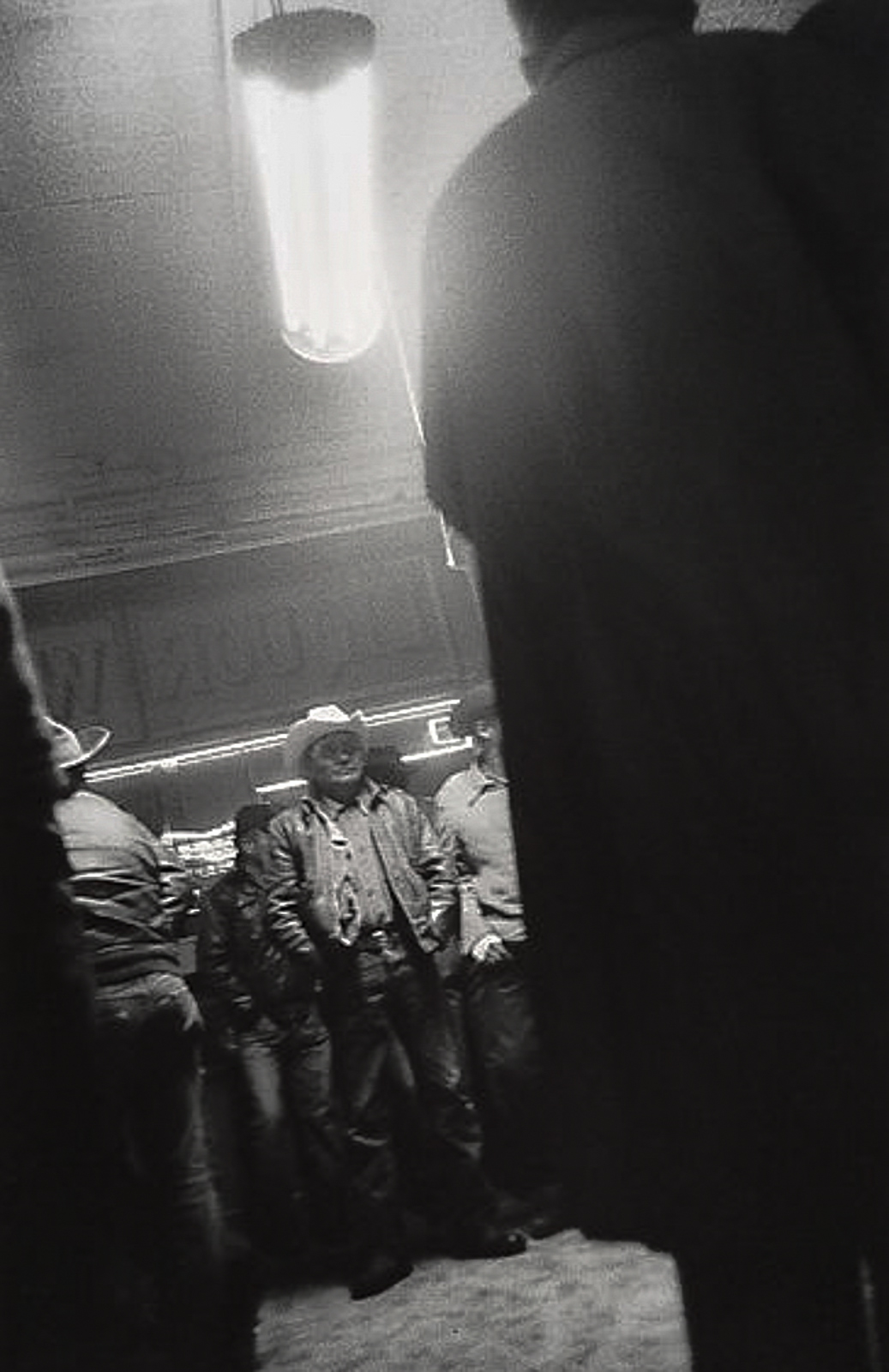
Bar – Gallup, New Mexico by Robert Frank from his seminal book The Americans (1958) is one of my favourite photographs. Why? I’m using that question as the starting point for something I’m writing about my involvement with photography.