
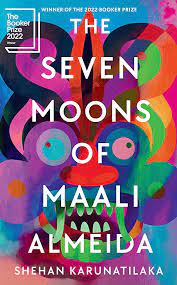
Colombo, 1990. Maali Almeida — itinerant war photographer, who loves his trusted Nikon, also atheist, closet gay man and high stakes poker player – ‘has woken up dead in what seems like a celestial visa office’. His dismembered body is sinking in the calm Beira Lake and he has no idea who killed him. In the afterlife, time is running out for Maali: he has seven moons to contact the man and woman he loves most and lead them to a cache photos stored under a bed that will be shared throughout Colombo and thus expose the brutalities of the Sri Lankan Civil War and rock the country.
‘Maali is a witness to the brutality of the insurrections in Sri Lanka. Working for newspapers and magazines, his ambition is to take photographs “that will bring down governments. Photos that could stop wars.” He has shot “the government minister who looked on while the savages of ’83 torched Tamil homes and slaughtered the occupants”, and taken “portraits of disappeared journalists and vanished activists, bound and gagged and dead in custody”. …. Maali doesn’t want his contribution as a witness to be consigned to oblivion. His own death has viscerally exposed to him the fragility of life, and the photos constitute his legacy for his country and a defence against collective amnesia.’
The Seven Moons of Maali Almeida by Shehan Karunatilaka won the Booker Prize in 2022.